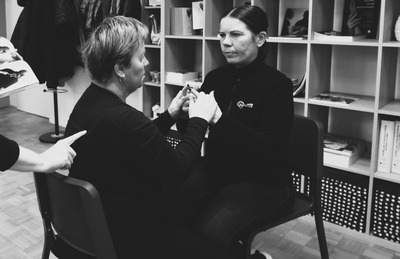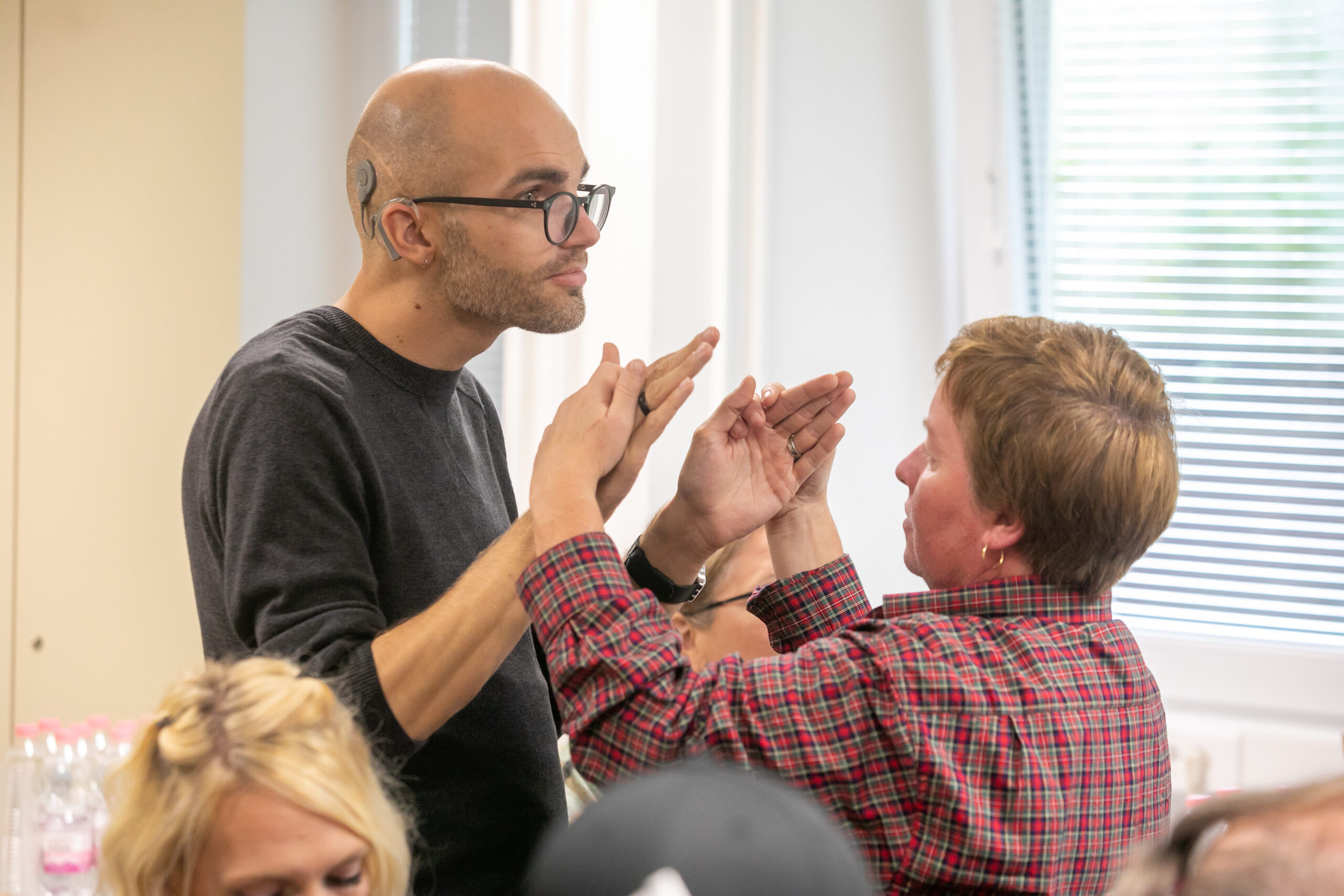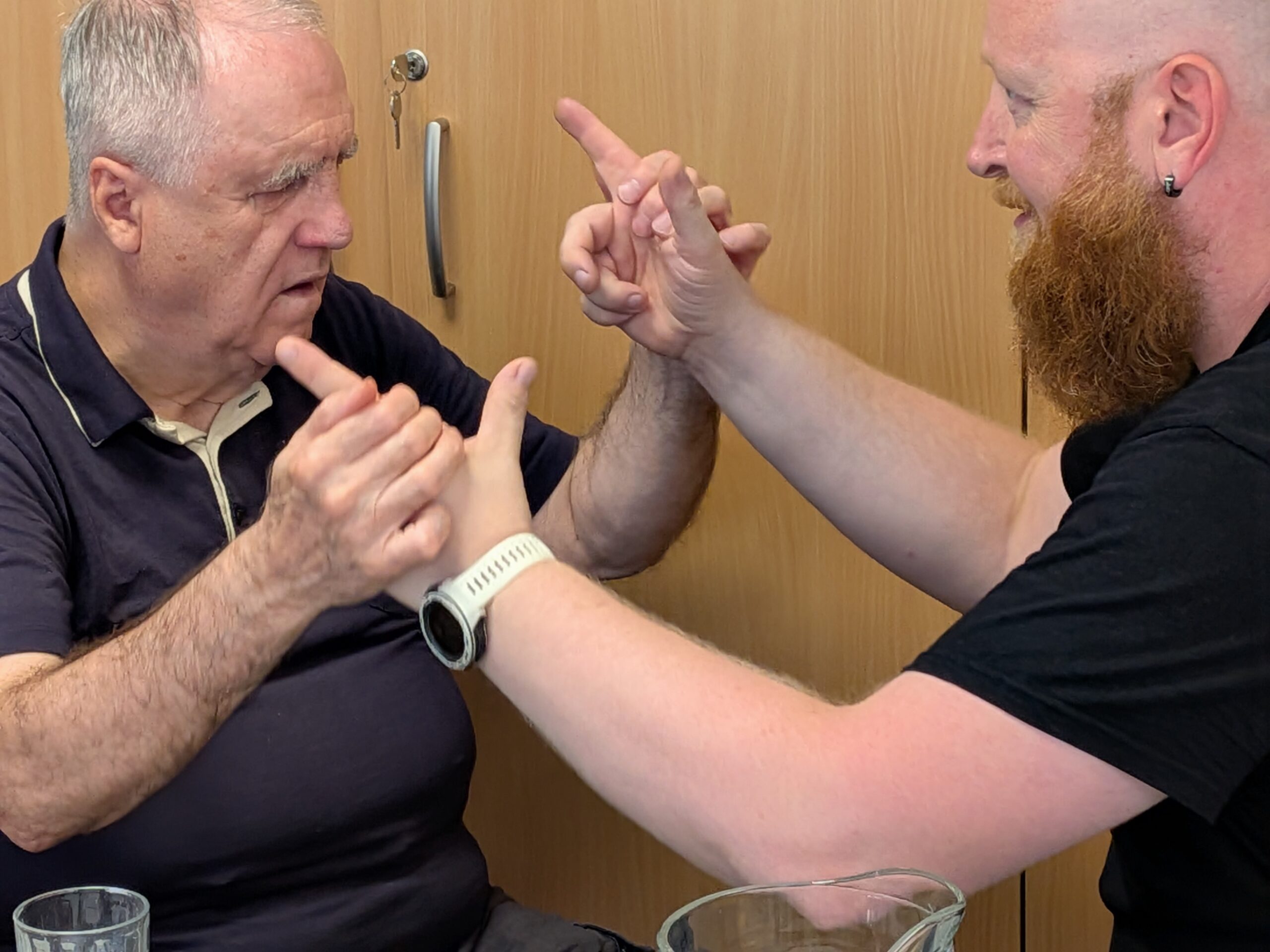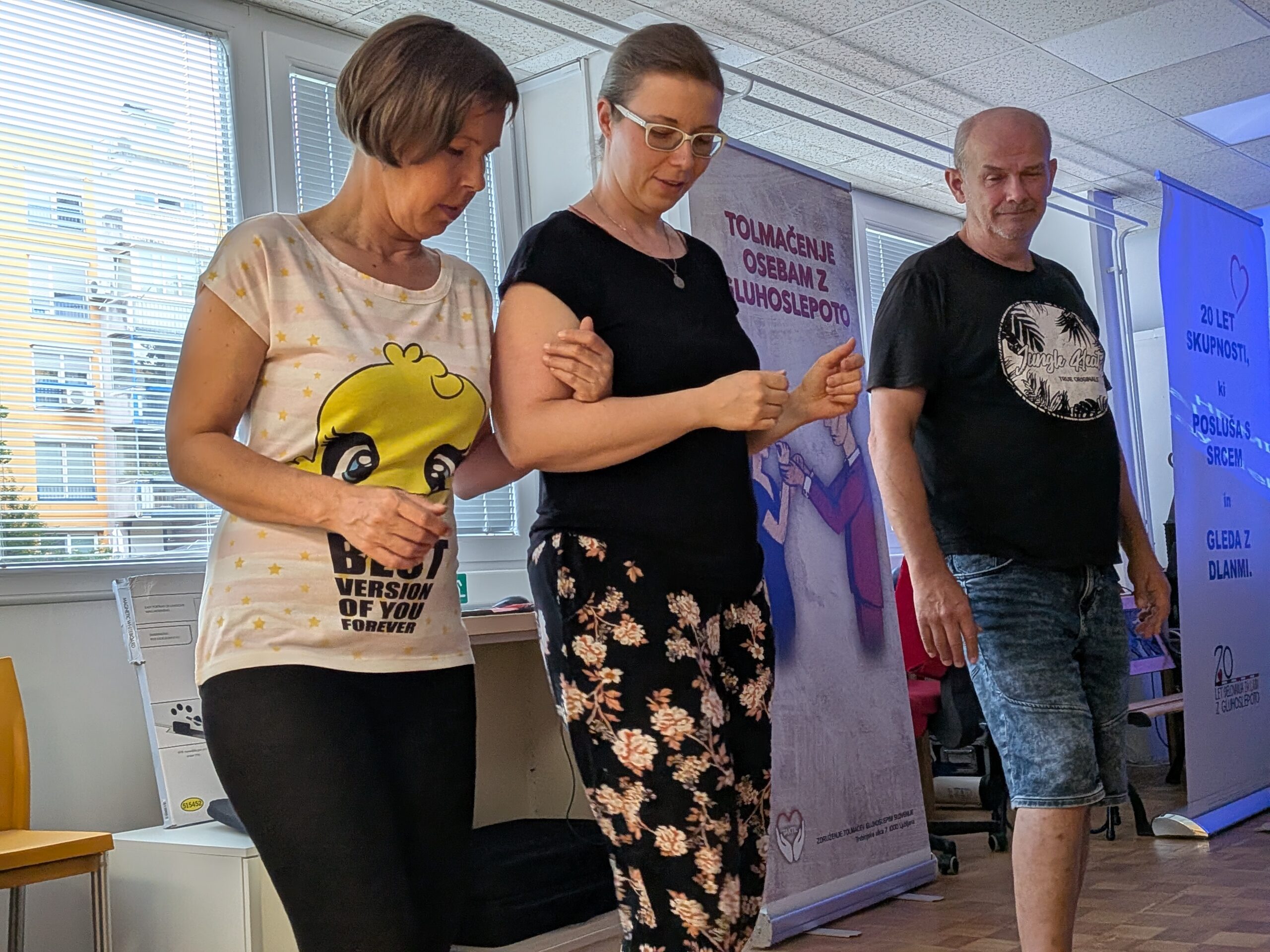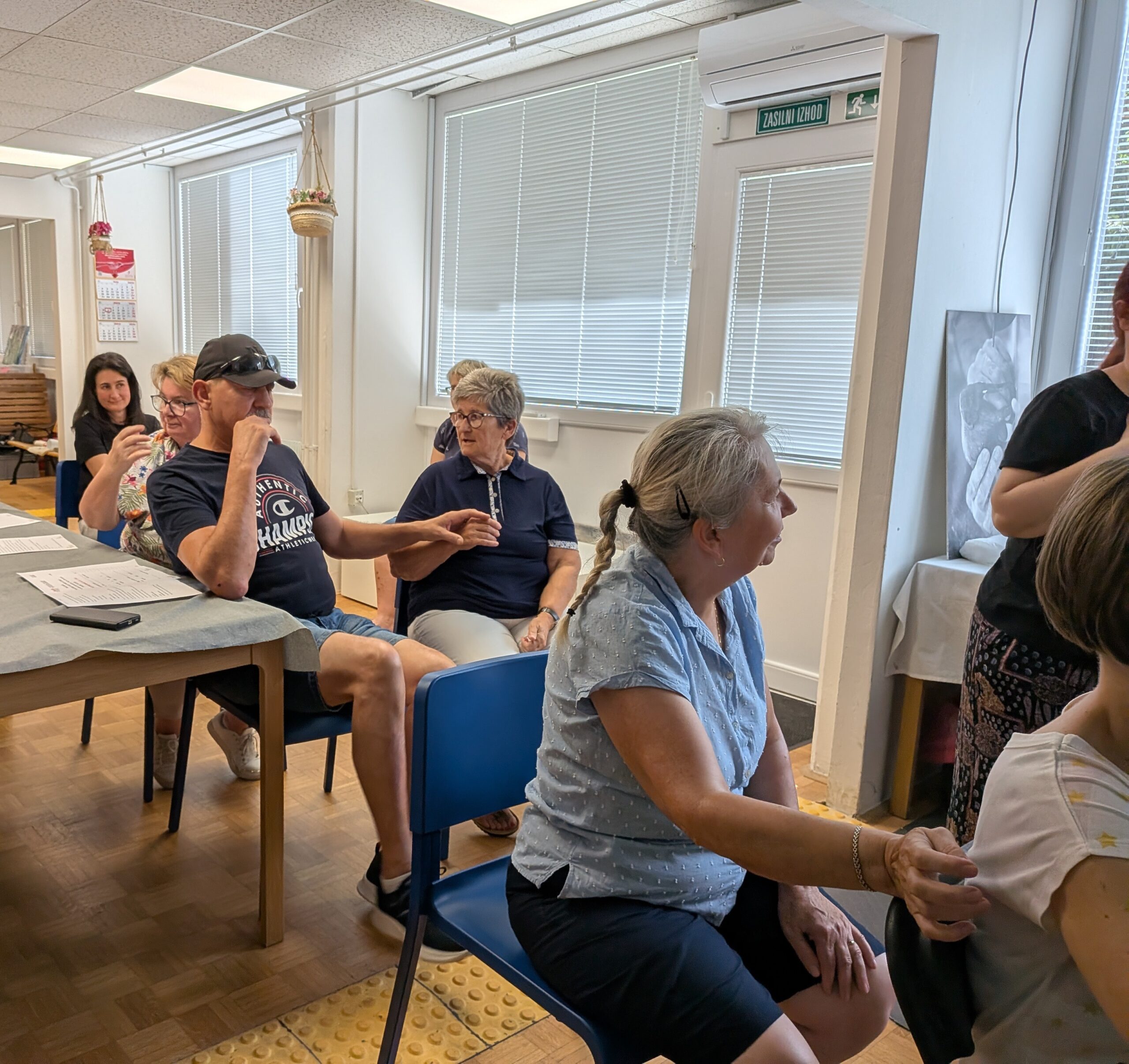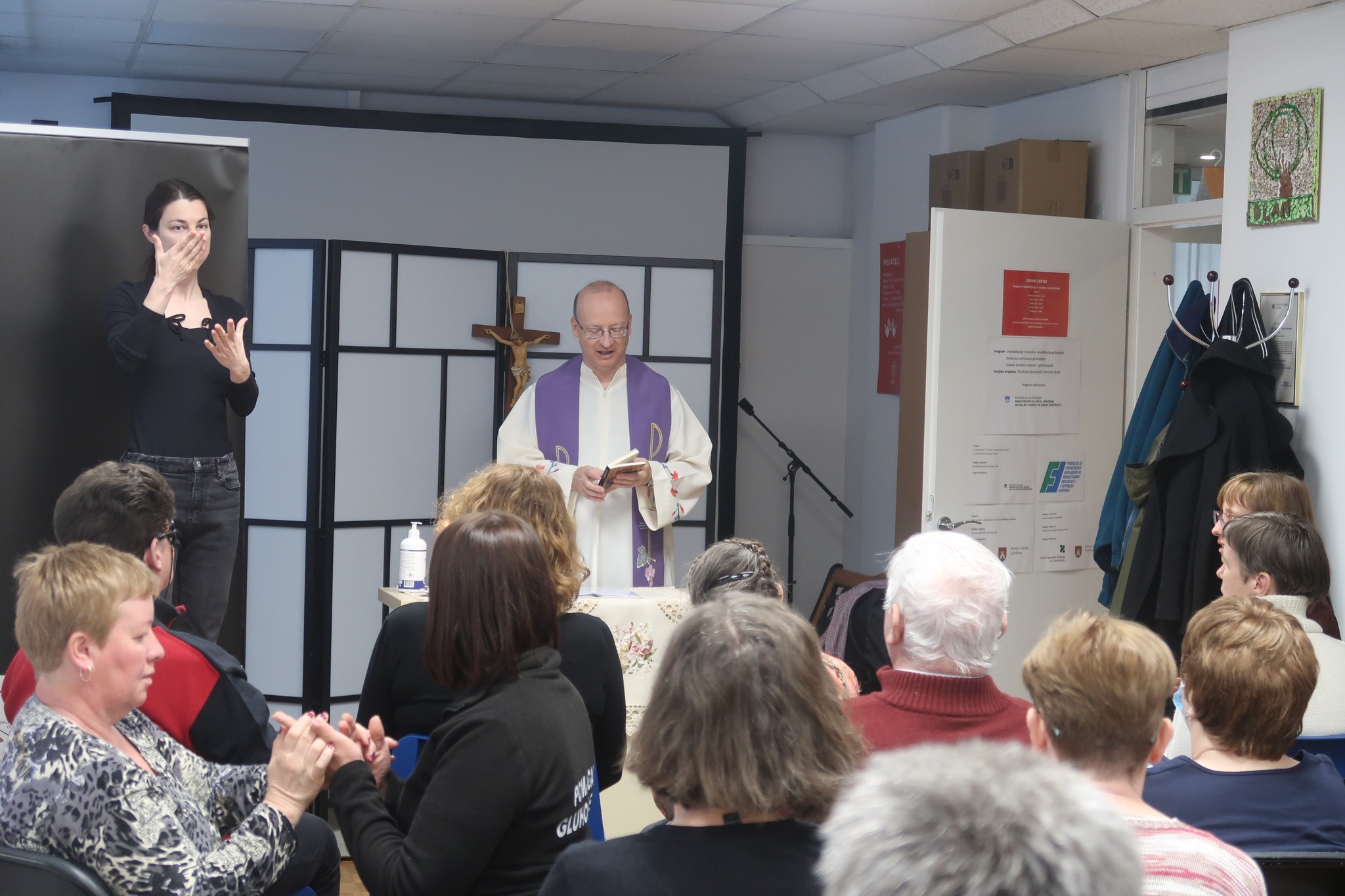
At the Deafblind Association of Slovenia DLAN, we are advancing the knowledge and use of haptic signs, which enable people with deafblindness to access information from their surroundings.
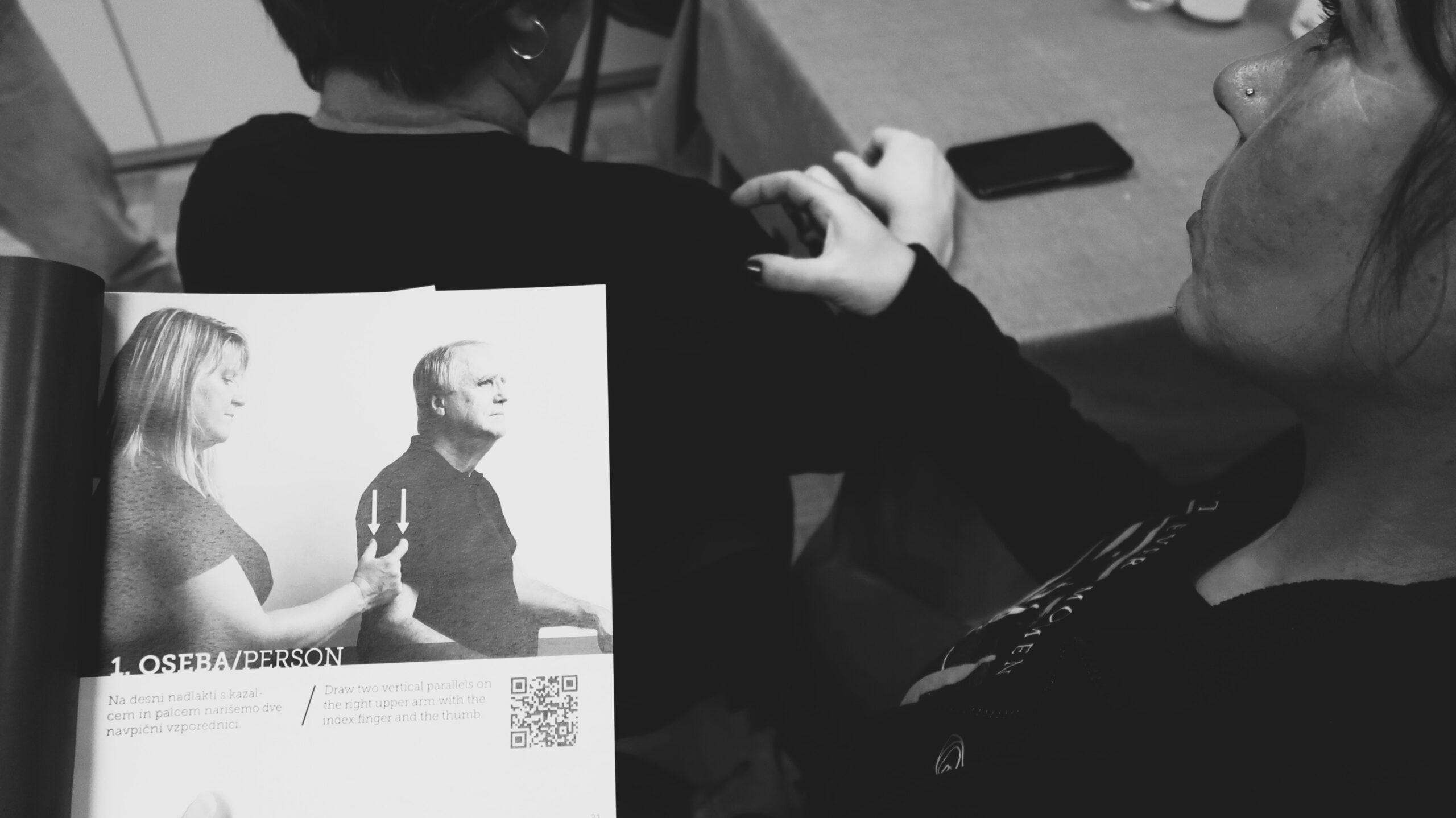
These are signs that the communication partner performs on the back, shoulders, upper arms, or other parts of the body of the person with deafblindness.
As part of the project The Deafblind Language as a Means of Inclusion for People with Deafblindness, funded by the Ministry of Culture, we are reinforcing new haptic signs.
It is important to repeat the signs multiple times, as individual movements can be fast or slow and may consist of one or several consecutive gestures. Accuracy and consistency in execution are key to correctly understanding the signs.
By linking haptic signs to concrete everyday situations, the haptic mode of communication becomes an essential tool for orientation and mobility. It enables people with deafblindness to achieve greater independence, safety, and inclusion in their environment.